
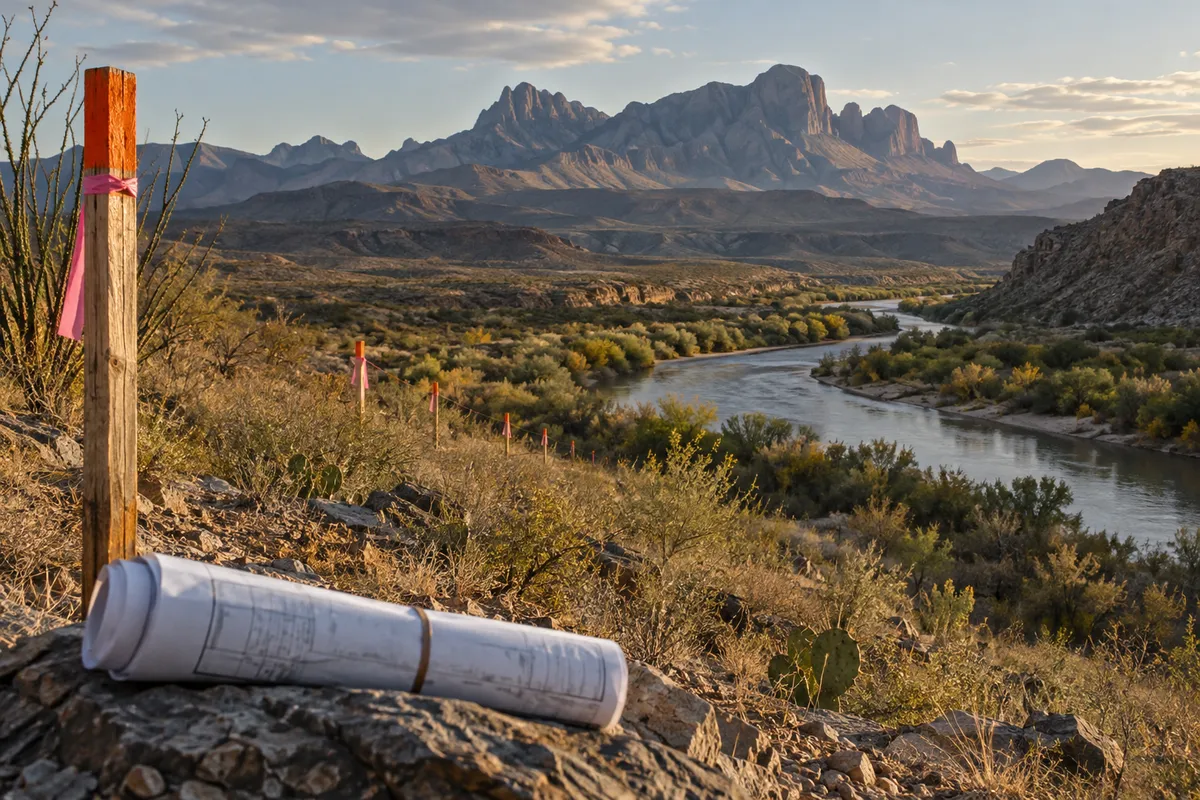
This story falls outside our usual football coverage, but it is a major Texas story, and you may want a clear read on it. By the end, you'll know what the Trump administration's top border official is arguing about Big Bend, why the region has become a flashpoint, and which questions will decide what happens next.
The details below come from an Associated Press interview with Customs and Border Protection Commissioner Rodney Scott, as carried by Wxow. We are summarizing AP's reporting, not adding our own.
What happened
Per AP, Scott is defending the administration's plans for a wall in Texas' Big Bend region, even after a court setback. Scott argues for the entire $46 billion border wall and infrastructure plan, according to the report.
The pushback is not small. AP describes lawsuits, local opposition and a court-ordered pause on the Big Bend work. Despite that, the administration is holding its position.
Why Big Bend is the flashpoint
AP frames Big Bend as a test of how far the administration will push its border-wall agenda. Two features make it a hard case, based on AP's framing:
- It is environmentally sensitive. Building a wall in a region like this draws objections that a more developed stretch of border might not.
- It is a low-crossing area. The central tension is between border-security goals and the question of whether a wall is needed where fewer people cross.
Those two points explain why the fight is about more than a single construction project. The debate pits a security promise against land, law and environmental concerns.
What the court pause means
The pause is the piece most likely to change the outcome, so it deserves care. Per AP, a court has ordered a halt to Big Bend construction, and the administration is asking the Supreme Court to lift limits on construction. The administration also claims it is ahead of schedule on its broader border buildout.
We don't have the full text of the court order, so we can't say exactly what it restricts or for how long. What the reporting does establish is the sequence: lawsuits, a pause, and an appeal to the nation's highest court. Until a ruling comes, the project's future in Big Bend is unsettled.
The arguments against the project
AP's reporting points to several lines of criticism:
- Environmental concerns about building in a sensitive region.
- Cost. Critics raise taxpayer-cost arguments against a $46 billion plan, and renewed debate over immigration enforcement spending is part of the backdrop.
- Local opposition, which has helped fuel the legal challenges.
The administration's counter, through Scott, is that the plan should be viewed and defended as a whole rather than piece by piece.
The wider scrutiny around CBP
The Big Bend dispute doesn't stand alone. AP notes it intersects with broader scrutiny of CBP tactics and with attention to cartel drone activity at the border. Drones are changing how people discuss border security, because a physical barrier and aerial threats raise different questions about what protection actually requires. We aren't claiming any specific conclusion here. It is simply a thread to follow as this story develops.
What to watch next
- The Supreme Court's response to the request to lift construction limits.
- Whether construction resumes in Big Bend if limits are loosened.
- How the administration defends the cost as the $46 billion figure draws scrutiny.
- What local residents and conservation groups do next, since their opposition is part of the lawsuits.
Our read: Big Bend is a useful case because the usual campaign-slogan version of the wall debate doesn't hold up there. When the terrain is sensitive and crossings are low, the argument shifts to evidence, cost and legal limits. That is a judgment on our part, not a finding from AP.
If you want to follow this closely, read AP's full interview with Scott and check for updates on the Supreme Court request, because that ruling will matter more than any single statement.